Ever heard of the Influence: The Psychology of Persuasion by Dr Robert Cialdini? This is probably the most important book ever written on ethical persuasion. So whether you are a business leader, a community leader, or a sales and marketing person, this book will give you solid advice on how to convince people to agree with you or buy what you are selling them. 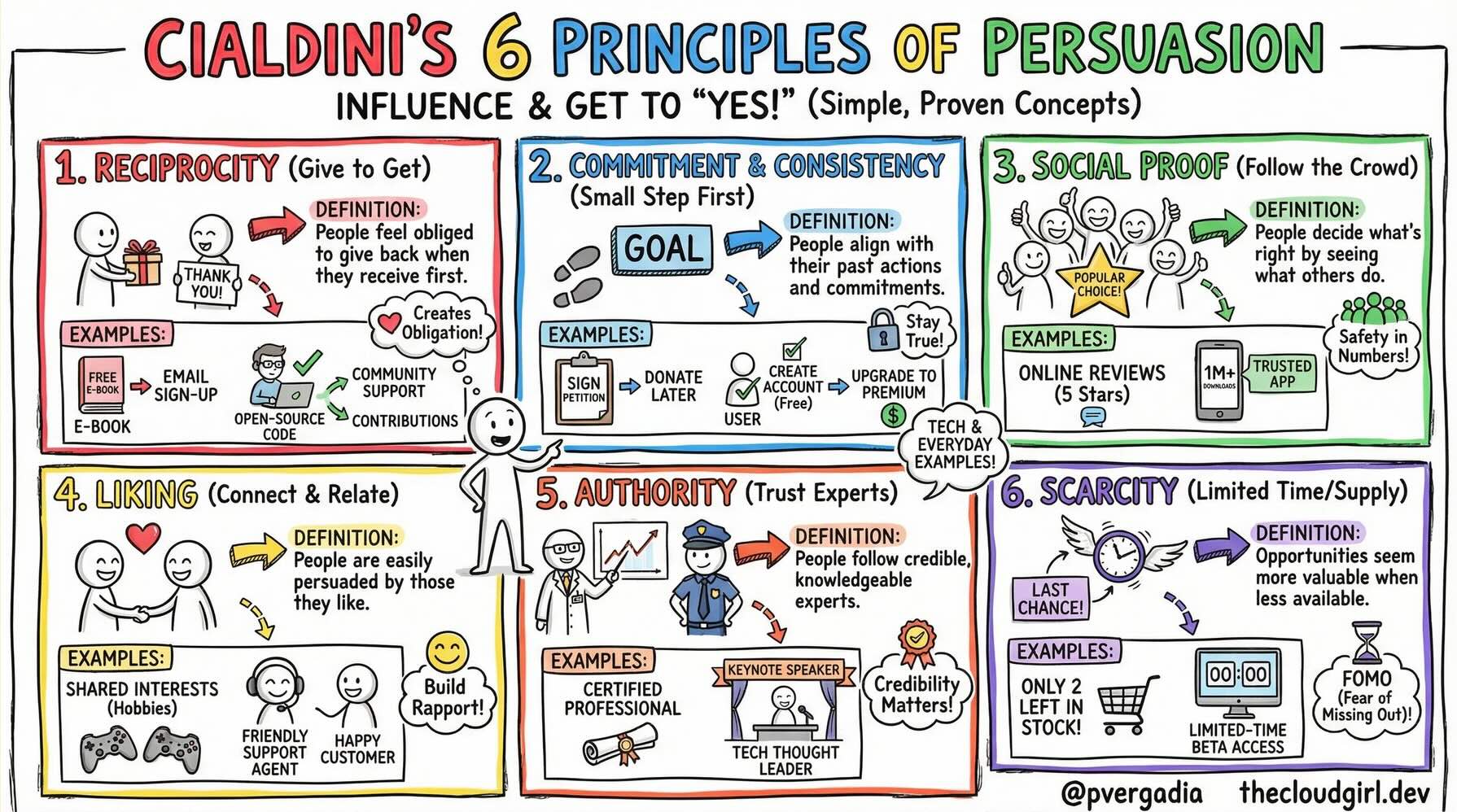

Robert Cialdini’s Weapons of Influence:
- Reciprocity: People tend to return a favour. Thus, the pervasiveness of free samples in marketing. In his conferences, he often uses the example of Ethiopia providing thousands of dollars in humanitarian aid to Mexico just after the 1985 earthquake, despite Ethiopia suffering from a crippling famine and civil war at the time. Ethiopia reciprocated for the diplomatic support Mexico provided when Italy invaded Ethiopia in 1937. On a personal note, if you invite people to a party at your house, you’re much more likely to get an invitation to a party at their house.
- Commitment and Consistency – If people commit, verbally or in writing, to an idea or goal, they are more likely to honour that commitment. Even if the original incentive or motivation is removed after they have already agreed, they will continue to honour the agreement. For example, in car sales, suddenly raising the price at the last moment works because the buyer has already decided to buy.
- Social Proof – People will do things that they see other people are doing. For example, in one experiment, one or more confederates would look up into the sky; bystanders would then look up into the sky to see what they were seeing. At one point, this experiment aborted, as so many people were looking up that they stopped traffic. See conformity and the Asch conformity experiments.
- Authority – People will tend to obey authority figures, even if they are asked to perform objectionable acts. Cialdini cites incidents, such as the Milgram experiments in the early 1960s and the My Lai massacre.
- Liking – People are easily persuaded by other people whom they like. Cialdini cites the marketing of Tupperware in what might now be called viral marketing. People were more likely to buy if they liked the person selling it to them. Some of the many biases favouring more attractive people are discussed. Social proof is a specific way to create the impression that you are popular or liked by people. Sometimes I see rich old men with young hot young women, and I realise one of the unconscious reasons for this is that they both gain influence.
- Scarcity – Perceived scarcity will generate demand. For example, saying offers are available for a “limited time only” encourages sales.
Anyway, I wanted to share this book with you because it’s vital to know how to influence people in the 21st century. There are so many influencers online, and this is one way to stand out from the rest.
My favourite weapon of influence is social proof. When I was a dating coach for men in South Africa, I used this method myself to create a greater social circle with women. More specifically, you can quickly build influence by meeting high-quality people to gain access to THEIR social circles. This creates more and more social proof, which becomes self-reinforcing.
Another strategy I used effectively was authority. By conducting original research into online dating and mobile chat applications in South Africa, then publishing the research results in the media, I was interviewed extensively in the news media and gained authority as a recognised expert in online safety and online behaviour. Each time I was interviewed, it built on the previous interviews, which the journalists referred back to.