Today is the 9th in my series of blog posts celebrating the TEDxPortElizabeth 10th Anniversary. Nomhle Nkonyeni was the most difficult of all speakers to persuade to deliver a TEDx Talk, for free. TED and TEDx speakers are not paid, and she demanded payment to deliver her performance. She did eventually agree that she would love to deliver our closing TEDx Talk.
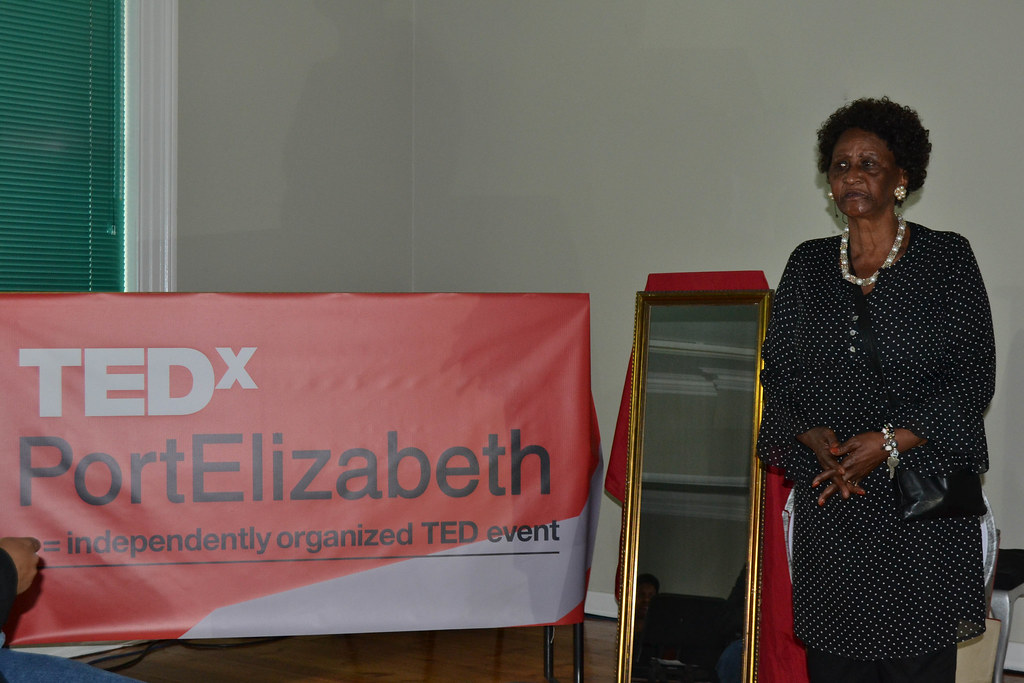
The story of Nomhle Nkonyeni, a prominent South African actress, is a powerful testament to resilience, passion, and the transformative power of the arts. From humble beginnings in a community arts association to performing on prestigious stages and starring in international films, her journey reflects the challenges and triumphs of black artists overcoming systemic barriers in apartheid and post-apartheid South Africa. I delve into her life, career milestones, and the legacy she continues to build.
Early Beginnings: Nurturing Talent in New Brighton
In 1961, the New Brighton Arts Association was formed in Port Elizabeth with a mission to engage youth positively and keep them off the streets. It was in this grassroots organisation that our actress began her artistic journey. The association provided a space for dance, drama, and other art forms, nurturing young talent with an emphasis on community involvement over professional training.
A turning point came when the legendary playwright Athol Fugard returned to Port Elizabeth and joined the New Brighton Arts Association. Although he did not formally teach acting or script interpretation, his mentorship was fundamental in nurturing her early talent. This guidance provided the foundation upon which her career would be built, instilling confidence and a professional mindset.
The actress became part of the Serpent Players, one of the top five drama groups globally at the time. These amateur artists worked passionately from 1961 to 1972, honing their craft and gaining recognition beyond South Africa’s borders. Her pride in this accomplishment was evident when she discovered their international fame during a visit to the UK, highlighting the global impact of their work.
Breaking Into Professional Theatre
Her professional breakthrough came when she moved to Cape Town and began working at The Space Theatre, a progressive venue known for challenging apartheid-era restrictions. Here, she performed alongside renowned actors like Yvonne Bryceland and Bonnie Simons, playing complex roles such as a crafty lady-in-waiting in a production of Greek mythology’s Medea.
Performing opposite white actors during apartheid was revolutionary. She recalled a notable incident where she refused to play a subservient role to Yvonne Bryceland’s character, leading to discussions that resulted in a more equal portrayal. This moment symbolised her determination to assert her dignity and challenge stereotypes both on and off the stage.
Despite initial hesitation from the Artscape Theatre, which was reluctant to employ black actors, she persevered through multiple auditions. After months of waiting and uncertainty, she finally secured a role, marking a significant milestone in her career. This opportunity opened doors for further professional engagements, solidifying her status as a respected actress.
Returning Home: Impacting Port Elizabeth’s Arts Scene
Returning to Port Elizabeth during a time of political unrest, she faced fears about safety and acceptance. However, her family and community warmly welcomed her, and she performed at the city’s Opera House—a first for a black actress. Her performance broke racial and social barriers, symbolising new possibilities for artists of colour in South Africa.
She viewed herself as a trailblazer who opened doors for others to follow. By refusing to “close the door” behind her, she actively encouraged and inspired younger generations to pursue careers in the arts. Her legacy is not only in her performances but also in the pathways she created for future talents.
Expanding Horizons: The Film Industry and Storytelling
After her success on stage, she transitioned into storytelling and children’s programs, working full-time for the South African Performing Arts Council (SAPAC). Despite enjoying this work, she felt a yearning to return to theatre, demonstrating her deep-rooted passion for live performance.
In 1985, she collaborated with fellow artists to open the Windybrow Theatre in Johannesburg, an important cultural institution that supported black artists during apartheid’s final decade. This initiative was the result of brainstorming sessions and collective creativity, reflecting her commitment to developing South Africa’s arts infrastructure.
Her filmography includes over 30 films, including collaborations with French and international filmmakers. One notable experience involved performing in French without speaking the language, relying instead on rhythm and emotion to convey her character authentically. This adaptability speaks to her professionalism and artistic skill.
Memorable Roles and Stories
She starred in Red Dust, a film written by a prominent South African writer, alongside British and Nigerian actors. The film tackled complex themes of justice and reconciliation, aligning with her own experiences in a transforming society.
During filming, she famously challenged a director’s attempt to alter how she welcomed a guest in an African household. She insisted on maintaining cultural authenticity, emphasising that external influences should not dictate African expressions and traditions. This incident highlighted her courage and dedication to representing her culture respectfully. This is big screen stories of a South African actress from Port Elizabeth, Eastern Cape.
Legacy and Continuing Influence
Beyond theatre and film, she continued to appear on television, reaching broader audiences and contributing to South Africa’s cultural landscape. Upcoming projects promise to build on her rich legacy, inspiring new generations of artists. She passed away in 2019, 3 years after our TEDx conferences.
Her story is one of perseverance, courage, and artistic excellence. From local community arts to international cinema, she broke down racial and cultural barriers, paving the way for others and changing the face of South African performing arts forever.
Conclusion
The journey of this South African actress exemplifies the power of art to challenge injustice and inspire change. Her career, spanning over five decades, has been marked by groundbreaking performances, leadership in cultural institutions, and unwavering commitment to authenticity. As South Africa continues to evolve, her legacy remains a beacon for artists striving to tell their stories with honesty and pride.
This comprehensive look at the life and career of a pioneering South African actress reveals how determination, talent, and cultural pride can transform not only an individual’s path but also the artistic landscape of a nation.